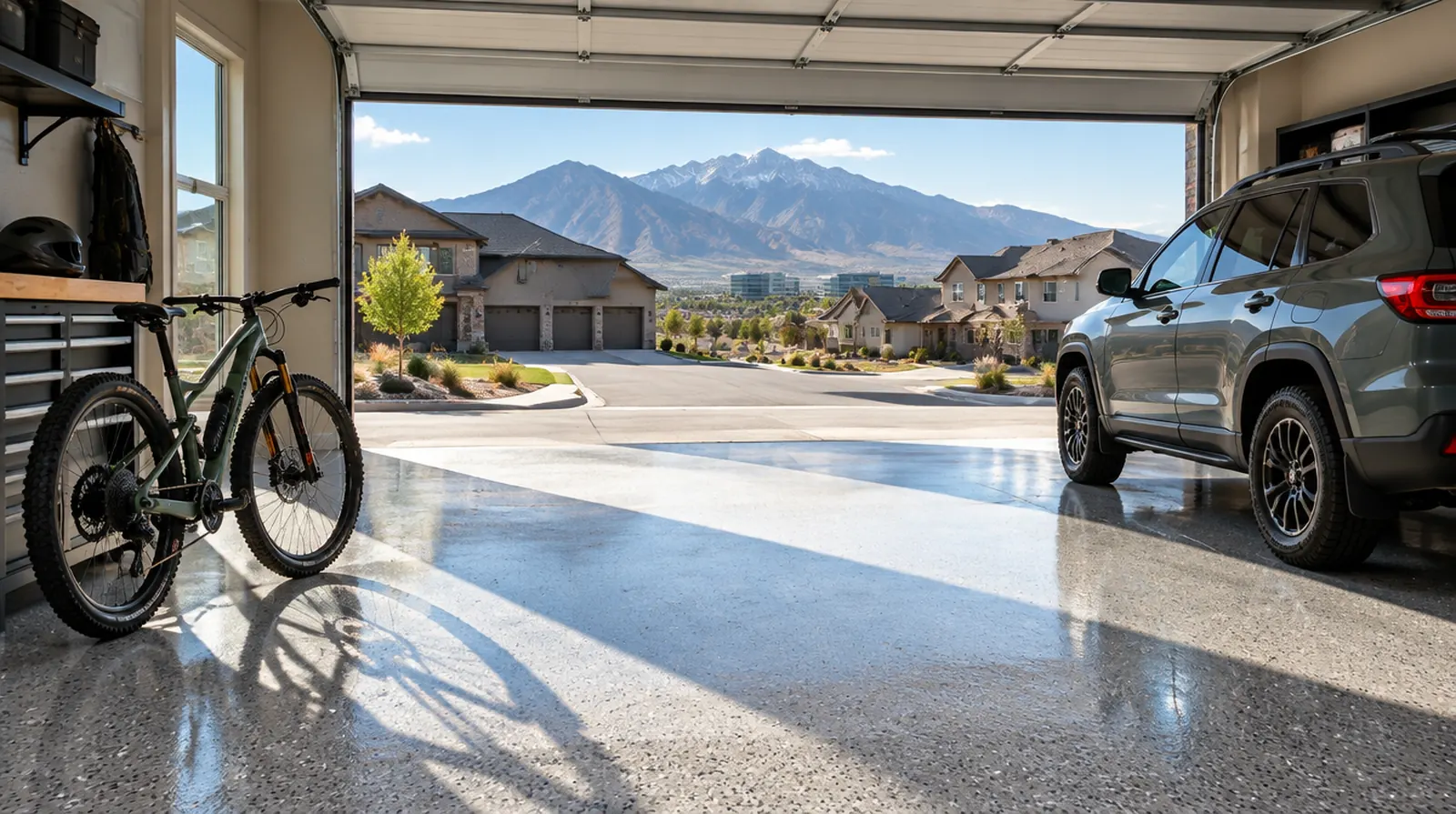
What polyaspartic is
Polyaspartic is a type of polyurea coating. It cures quickly, holds up well to UV light and stays flexible enough to handle temperature swings. We use it as a base coat, a topcoat or both depending on the slab and the look you want.
Why it suits local garages
Garage doors here often stay open for hours, letting strong high-altitude sun pour across the floor. Standard epoxy can yellow under that exposure. Polyaspartic stays clear. Dry air and big temperature swings between day and night make slabs move, and polyaspartic flexes with them. It also resists the brine and deicers that come in on tires every winter.
One-day floors
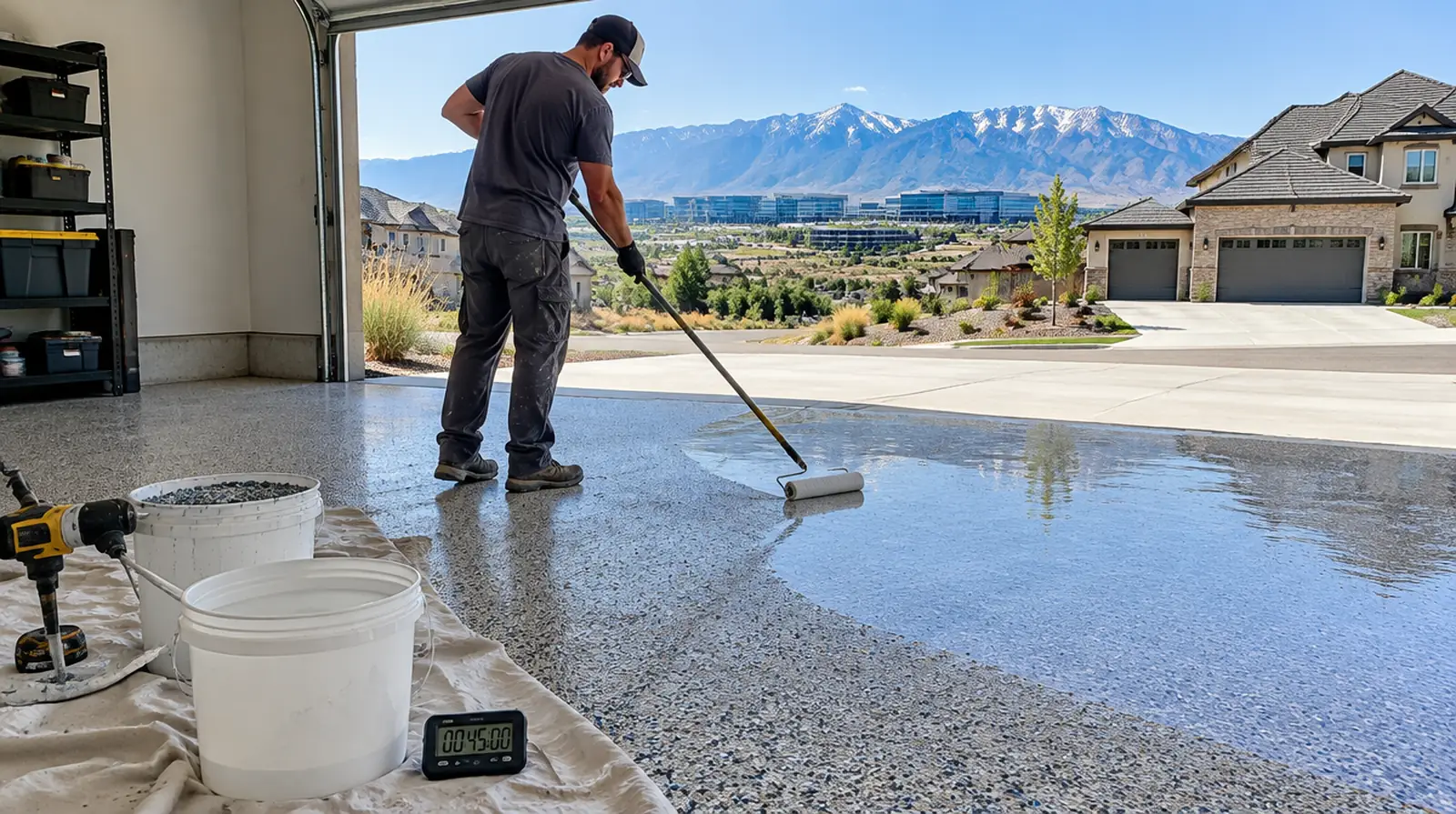
On many garages, we can grind, repair, coat, broadcast flake and topcoat in a single day. You can walk on it that evening or the next morning and often park within a day or two. For families with kids, sports schedules and commutes, that is a big advantage.
Installation in all seasons
Polyaspartic cures at lower temperatures than epoxy, so we can install it in cooler months. In summer, its fast cure requires careful planning because heat speeds it up further. Our crews mix small batches and work in a set sequence to keep the finish even.
Chemical and abrasion resistance
Cured polyaspartic resists oil, gasoline, antifreeze, brine, cleaners and many solvents. It is very hard, which helps against abrasion from tires, tools and equipment.
Hot tire resistance
Summer tires can soften weaker coatings and pull them off. A polyaspartic topcoat on a properly ground slab handles hot tires well.
Pairing with epoxy
On slabs with moisture concerns or deep repairs, we often start with an epoxy primer and finish with polyaspartic. For metallic floors, epoxy is used for the decorative layer because it allows more working time.
Odor and ventilation
Some polyaspartics have a strong odor during application. We ventilate the garage, close interior doors and recommend keeping pets away until it cures.
Commercial uses
Retail stores, offices, gyms and clinics use polyaspartic when they need floors back in service overnight. We schedule after hours and reopen spaces quickly.
Care
Sweep dust, mop with a neutral cleaner and rinse winter brine. The topcoat does not need waxing or resealing for many years.
Cost compared with epoxy
Polyaspartic material costs more per gallon than many epoxies, and installation requires an experienced crew because of the short working time. In return, you get faster return to service, better UV resistance and strong chemical resistance. For garages with big sunny doors and families who cannot wait days to park, it is usually worth the difference. We compare both options in writing so you can decide.
Questions to ask installers
Ask whether the slab will be ground rather than acid etched, how moisture will be tested, how thick the system is and what topcoat will be used. Clear answers show the crew understands fast-cure materials.
Warranty and expectations
A well-built polyaspartic floor can last many years in a residential garage. We explain what affects lifespan, including dropped tools, heavy equipment and maintenance, so you know what to expect.
Colors and textures
Polyaspartic works with flake, quartz and solid-color systems in gloss or satin finishes. Satin reduces glare from bright sun through the garage door and shows less dust. We adjust texture for grip, which helps when snow melts off vehicles. Sample boards help you compare finishes before we start, so the result matches your expectations.
Book a one-day floor
Call (000) 000-0000 for a free estimate.