How polishing works
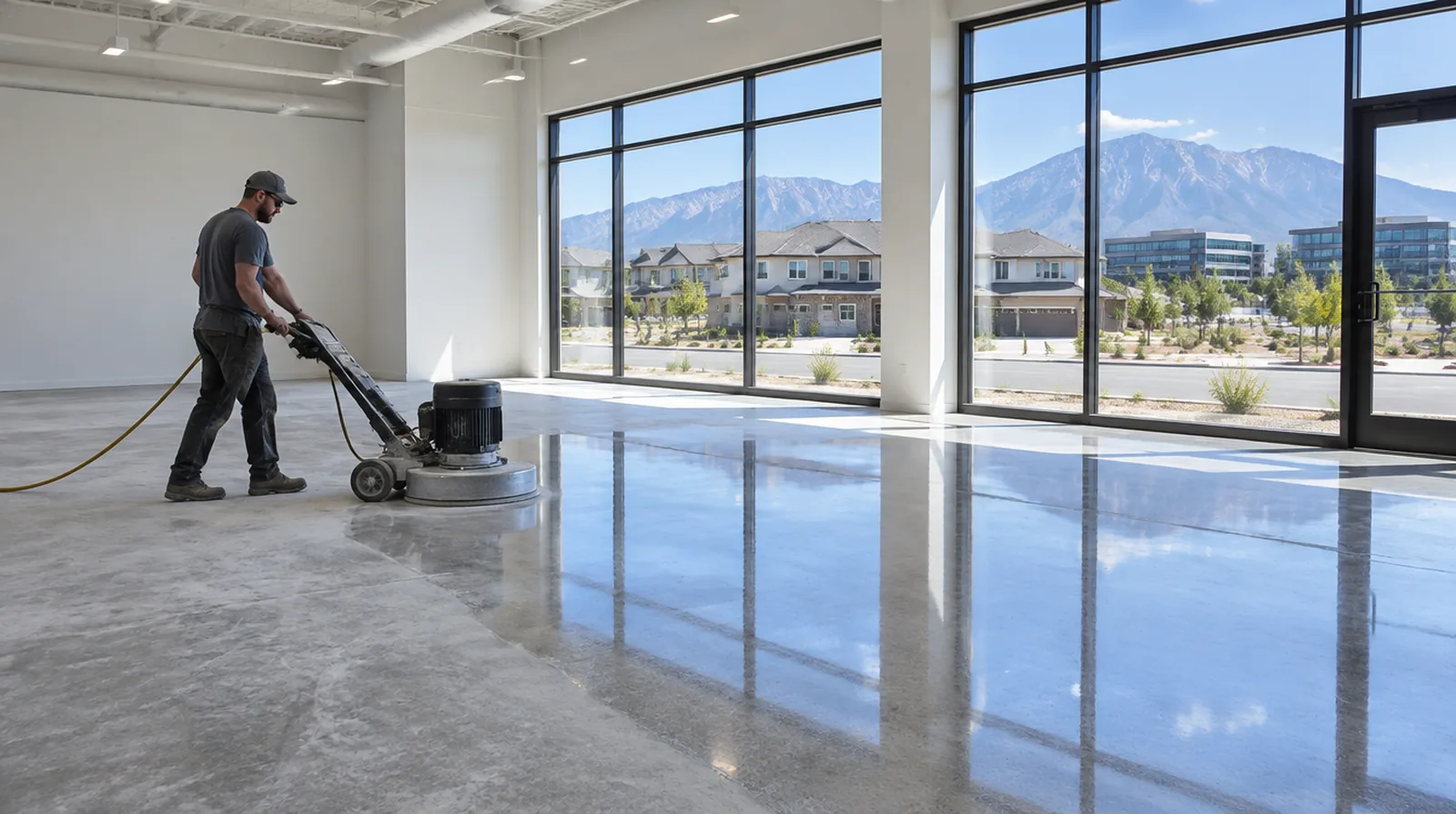
We grind the slab with progressively finer diamond tools, apply a densifier that hardens the surface and polish with resin pads to the desired sheen. A penetrating guard adds stain resistance. There is no coating to peel, and the floor never needs waxing.
Where it fits
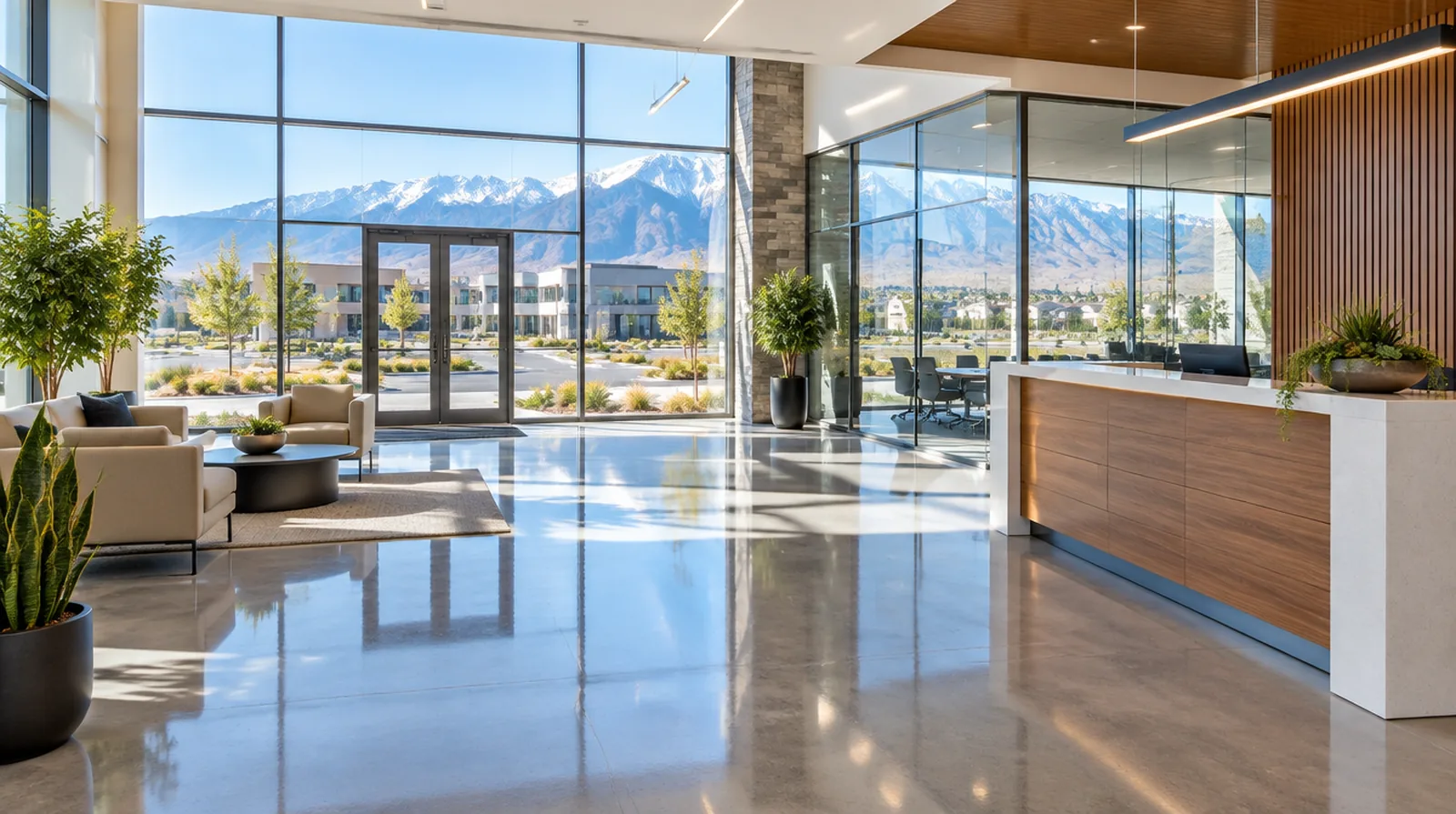
New office buildings, retail spaces, showrooms and lobbies often start with concrete slabs. Polishing them instead of covering them saves money and creates a clean, durable surface that matches modern design. In homes, polished concrete suits basements, main floors with radiant heat and modern builds.
Finish levels
Cream finishes show minimal aggregate. Salt and pepper finishes reveal fine sand. Full aggregate finishes show stones. Sheen ranges from matte to high gloss. Dyes add color, logos and borders.
Durability and dust
Densified, polished concrete is hard and resists abrasion from foot traffic, carts and rolling chairs. It also stops the dusting common on bare slabs, improving indoor air quality.
Polished concrete at home
It works well in basements where carpet can trap allergens and moisture, and in modern main living areas with rugs for comfort. It pairs with radiant heat, holding warmth in winter.
Honest assessments
Not every slab polishes evenly. Patches, adhesives and stains can show. We inspect and may grind a test area. Sometimes a grind and seal or a coating is a better fit.
Grind and seal
A lower-cost option with fewer steps and a clear sealer, suitable for storage areas, warehouses and back rooms.
Maintenance
Dust mop and damp mop with a neutral cleaner. Auto scrubbers work in commercial spaces. Periodic burnishing restores shine in traffic paths.
Timeline
Small spaces take a couple of days. Larger commercial spaces are scheduled in phases.
Cost and lifespan
Polished concrete is often one of the most economical floors over time because there is no coating to replace and maintenance is simple. Initial cost depends on slab condition, size and finish level. A well-cared-for polished floor can last decades with only occasional burnishing. In commercial spaces, eliminating stripping and waxing saves significant labor each year.
New construction
On new commercial projects, we can work with builders to plan for polishing before walls and fixtures are installed, which allows us to reach every corner with large equipment and produce a more uniform finish. We also advise on protecting the slab during construction so it is not stained or damaged before polishing.
Polishing over radiant heat
Many modern homes have radiant heating tubes in the slab. We locate the tubing depth and keep grinding shallow to avoid damage. Polished concrete over radiant heat creates a warm, comfortable floor in winter.
Dyes and design
Water- and solvent-based dyes add color, from warm browns to deep grays and blues. In offices and retail, we can create logos, borders or zones that guide visitors through the space.
Indoor air and allergies
Polished concrete does not trap dust, pet dander or pollen like carpet does, and it does not off-gas like some flooring materials. For families with allergies and offices focused on healthy buildings, that is a real benefit. Paired with area rugs in living spaces, it combines comfort with easy cleaning, and dust mopping takes only minutes each week.
Warehouses and back rooms
Large warehouses and storage areas benefit from densified, ground concrete that cuts dust and resists forklift wear without the cost of a full high-gloss polish.
Curious how your slab would look? We can polish a small test section during the estimate so you can see the aggregate, color and sheen before committing to the full floor.
Ask about polished concrete
Call (000) 000-0000 for a free estimate.