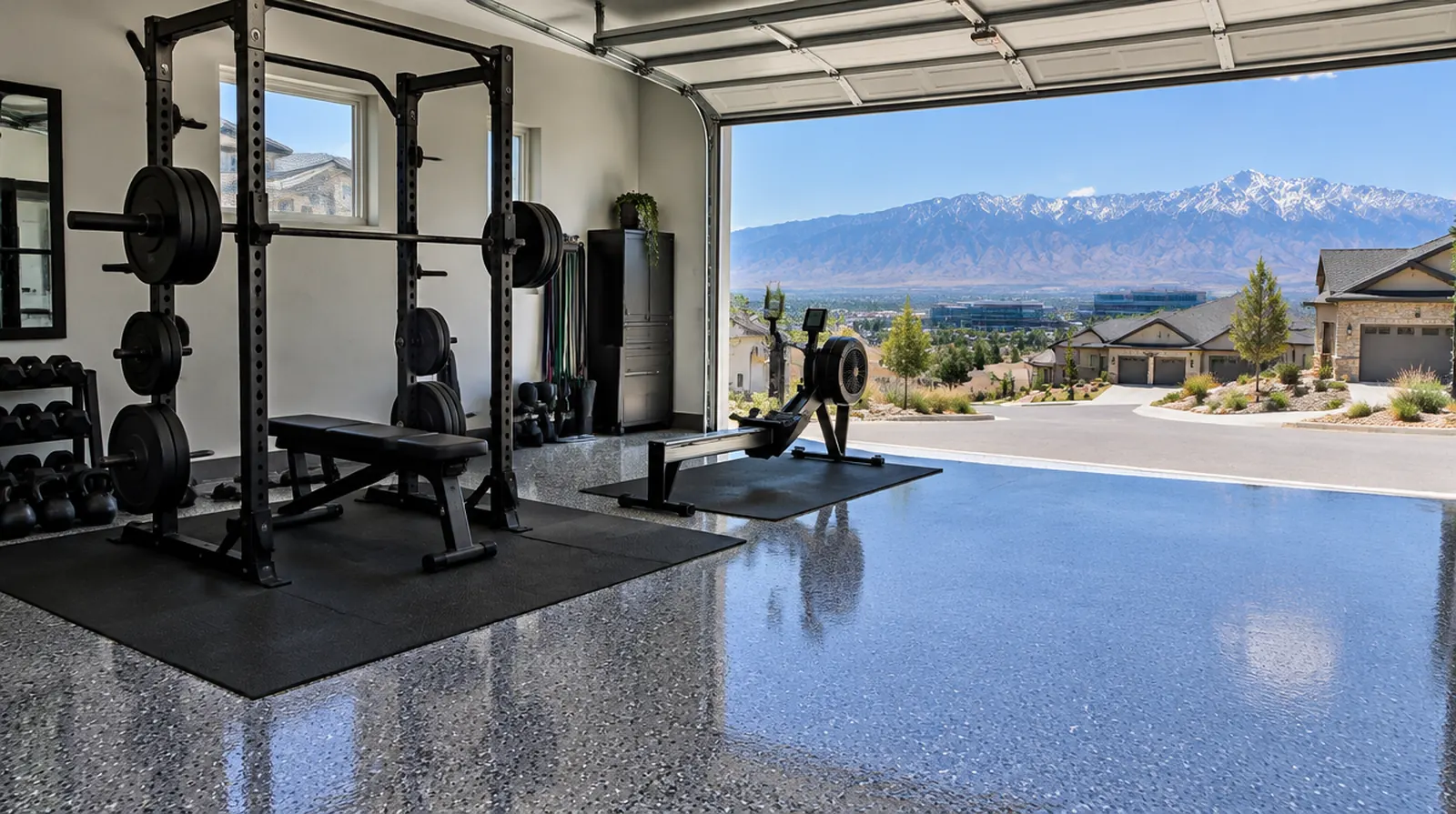
What a flake floor is
A flake floor is a layered system. After grinding and repairs, we apply a pigmented base coat and broadcast colored vinyl chips into it while it is wet. We use enough chips to fully cover the surface. Once it cures, we scrape and vacuum the excess and seal everything with a clear topcoat. The chips add color variation, texture and thickness.
Why flake works so well here
Wind-blown dust, dry soil from new landscaping, snowmelt and brine are constant in local garages. Solid-color glossy floors show every speck. Flake floors hide dust, footprints and small debris between cleanings. The textured surface also provides grip when snow melts off tires and boots, which matters with icy winters.
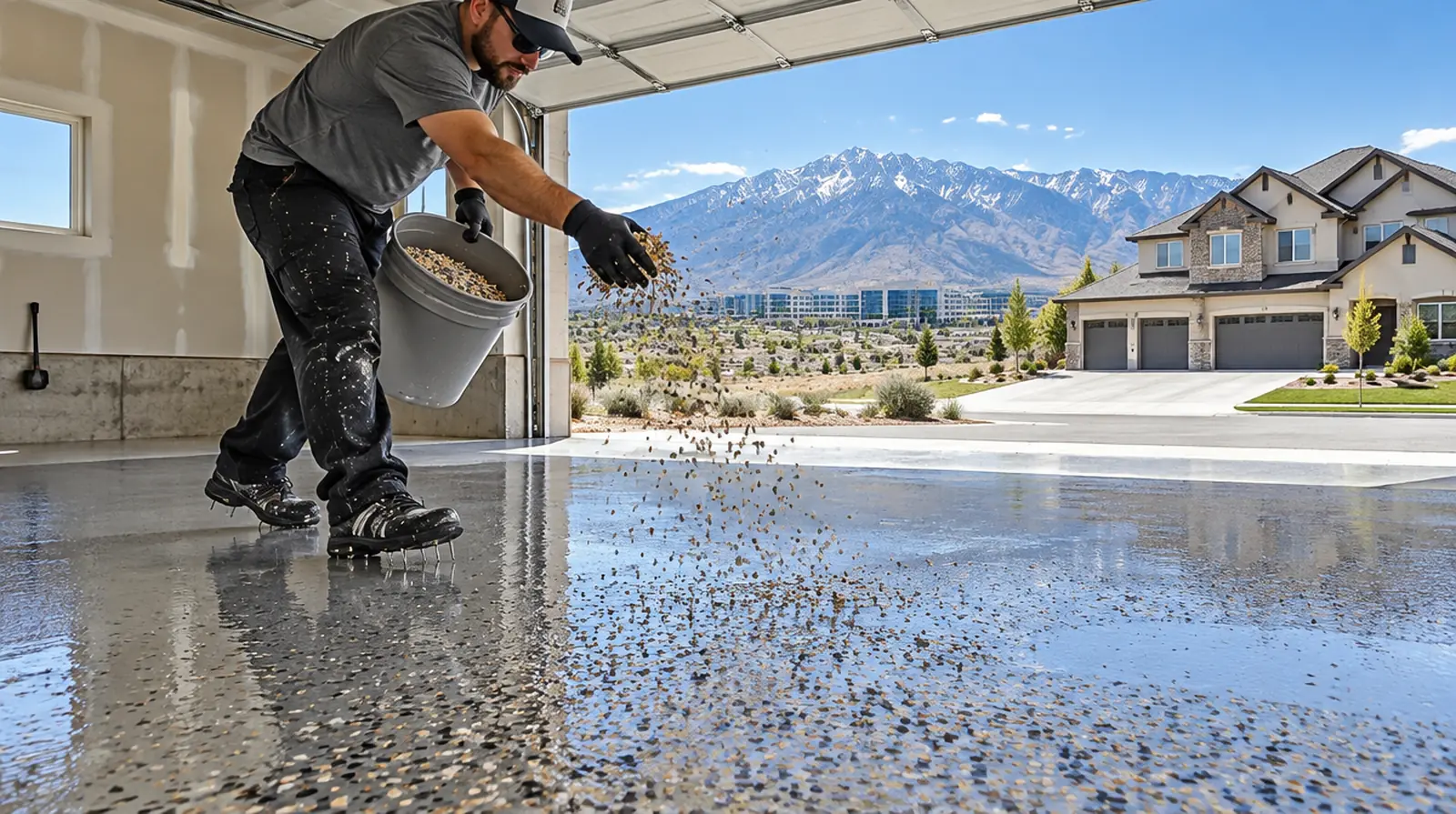
Choosing colors
Earth-tone blends with tan, brown and gray complement stucco and stone homes. Gray and black blends give a crisp, modern look and pair with white or black cabinets. Lighter blends brighten garages with few windows. Chip size changes the look too: larger chips create a bold pattern, smaller chips a finer texture. We bring sample boards so you can compare them in your garage lighting.
Full broadcast versus partial
Partial broadcast scatters a few chips on a solid base. It looks speckled but is thinner and less textured. Full broadcast covers the base completely, adding build and durability. We recommend full broadcast for garages because of vehicle traffic and dust.
Topcoat choices
Polyaspartic topcoats are UV stable, chemical resistant and cure quickly. Polyurethane topcoats also resist UV and wear. We adjust texture by how heavily we roll the topcoat over the chips: rougher for more grip, smoother for easier cleaning.
Beyond the garage
Flake floors suit laundry rooms, mudrooms, basement storage, home gyms, workshops and covered patios. Commercially, they are popular in fitness studios, locker rooms, breakrooms, clinics and retail back rooms. The seamless surface cleans easily and stands up to traffic.
Home gyms
Flake floors resist sweat, chalk and spills. We recommend rubber mats under heavy racks and in drop zones to protect both the floor and your equipment, while the coated floor around them stays clean and easy to mop.
Durability
A well-installed flake floor resists oil, brine, hot tires and abrasion for many years. When traffic eventually dulls the surface, a new topcoat restores it without starting over.
Timeline
Most flake floors are finished in one or two days, depending on size, repairs and the base and topcoat materials. Polyaspartic systems allow faster return to service.
Cleaning
Use a dust mop or leaf blower for regular dust, mop with a neutral cleaner and rinse winter brine. Avoid harsh acids. That routine keeps the floor looking fresh.
Covered patios and basements
Flake systems also work on covered patios, basement storage rooms and walkout entries where dust and moisture come in from outside. For exterior areas, we choose UV-stable materials and a texture that suits wet shoes. In basements, we check moisture first and add a mitigating primer if needed so the floor bonds properly.
Cost factors
Price depends on size, the condition of the slab, how many cracks and joints need treatment, the base and topcoat chosen and whether stem walls or steps are coated as well. We list each item in our written quote so you can compare clearly and decide which upgrades are worth it to you.
Stem walls and steps
We can carry the flake system up the short concrete stem walls around the garage and onto the step into the house. This gives the room a finished, wraparound look and protects edges that collect dirt and brine.
Pick your flake blend
Call (000) 000-0000 for a free estimate.