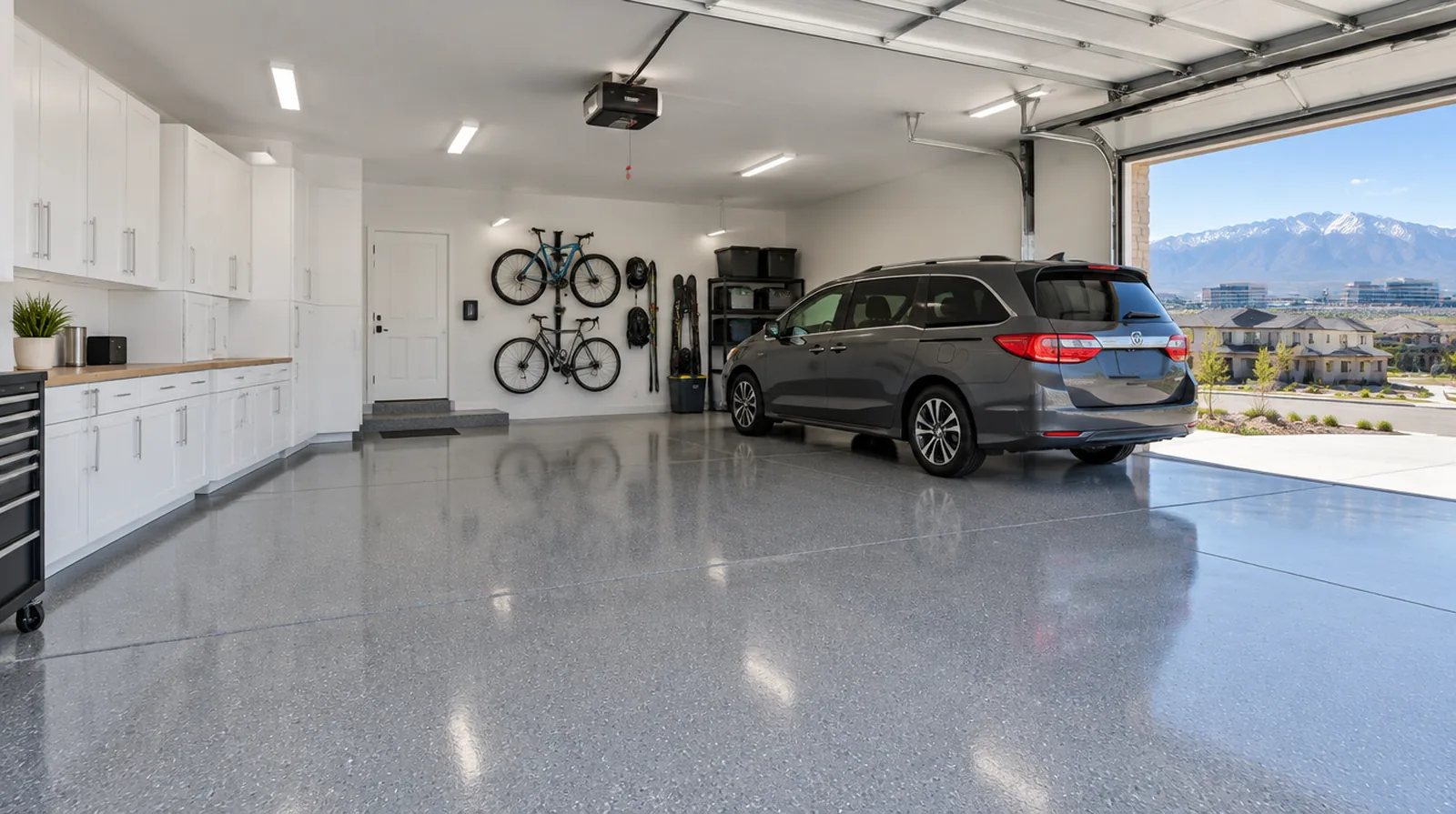
Why bare garage concrete wears out
Garage concrete in new homes is finished quickly and often left without any sealer. It is porous, so it absorbs oil, antifreeze and winter road brine. It dusts, meaning fine powder breaks off the surface and gets tracked inside. Hairline cracks appear as the slab shrinks and settles. Tires leave dark marks. After a few winters, the floor looks old even when the house is still new. Epoxy closes the pores and gives you a hard, sealed surface that stays clean.
What goes into our system
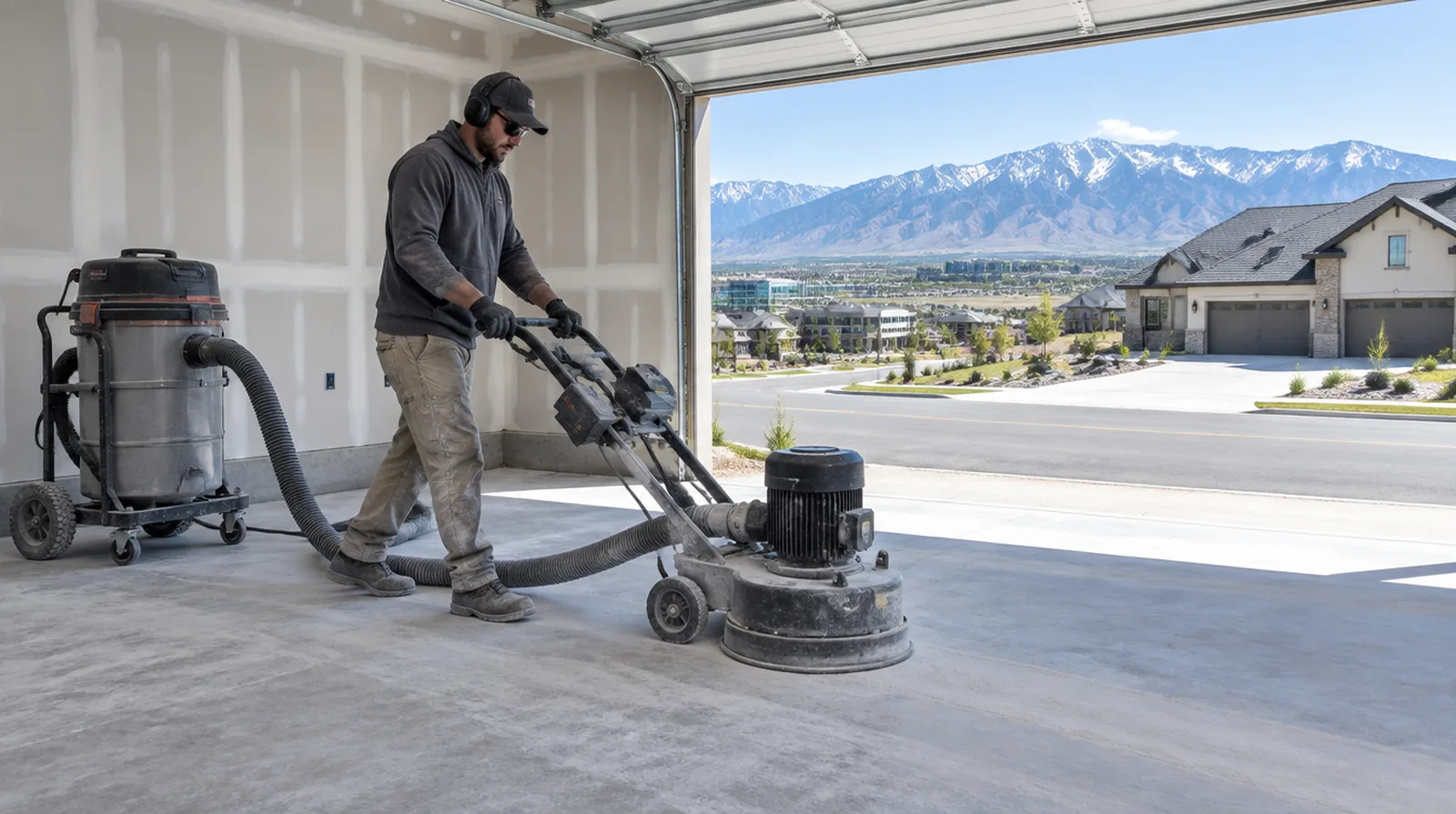
We start by diamond grinding the slab, which removes the weak top layer and any curing compounds while creating a texture coatings can grip. We fill cracks and treat control joints, then apply a 100% solids epoxy or polyaspartic base coat. Most garages get a flake broadcast for texture and color, and we finish with a UV-stable polyaspartic or polyurethane topcoat that resists sunlight, chemicals and abrasion.
Sun at elevation
At this altitude, UV exposure is strong, and many garages face west or south with the door open for hours on summer afternoons. Some epoxies yellow under that sun. UV-stable topcoats keep colors true, so the area near the door matches the back of the garage years later.
Winter brine and snowmelt
Roads are treated with salt brine and other deicers that cling to vehicles and drip onto the garage floor. On bare concrete, that brine slowly damages the surface and leaves white residue. On a coated floor, it sits on top and can be squeegeed out or rinsed away.
Hot tire pickup
Summer asphalt can heat tires enough to soften weak coatings, which then lift when you drive away. Proper grinding and quality, fully cured materials prevent this. We tell you exactly when you can start parking so the coating reaches full strength first.
Big garages, many uses
Three-car and tandem garages are common, and they rarely hold only cars. They store bikes, kayaks, camping gear, holiday decorations and tools, and many serve as gyms or workshops. A coated floor resists scuffs and drips from all of these and makes reorganizing easy. We can mark parking zones or a gym area with color if you like.
Colors and finishes
Flake blends in gray, tan, brown and black hide dust and suit local stucco and stone exteriors. Solid gray with a light flake gives a clean, modern look. Satin finishes reduce glare and show less dust than high gloss. We bring samples so you can see options in your space.
DIY kits versus professional systems
Store kits are thin water-based coatings applied after acid etching instead of grinding. They often peel under hot tires within a year or two. Our systems are many times thicker and bond to a mechanically prepared slab. The difference shows over years of use.
Timeline
Most garages take one to two days. You can walk on the floor within hours and usually park after a day or two with polyaspartic, or after several days with full epoxy systems. We give you clear instructions at the end of the job.
Care
Sweep or blow out dust, mop with a mild cleaner and rinse brine regularly in winter. Use mats under tires if you want extra protection, and place pads under jack stands and heavy equipment.
Adding value to your home
A finished garage floor is one of the details buyers notice when touring homes. It signals a well-kept property and makes the garage feel like usable space instead of storage.
Upgrade your garage floor
Call (000) 000-0000 for a free estimate.