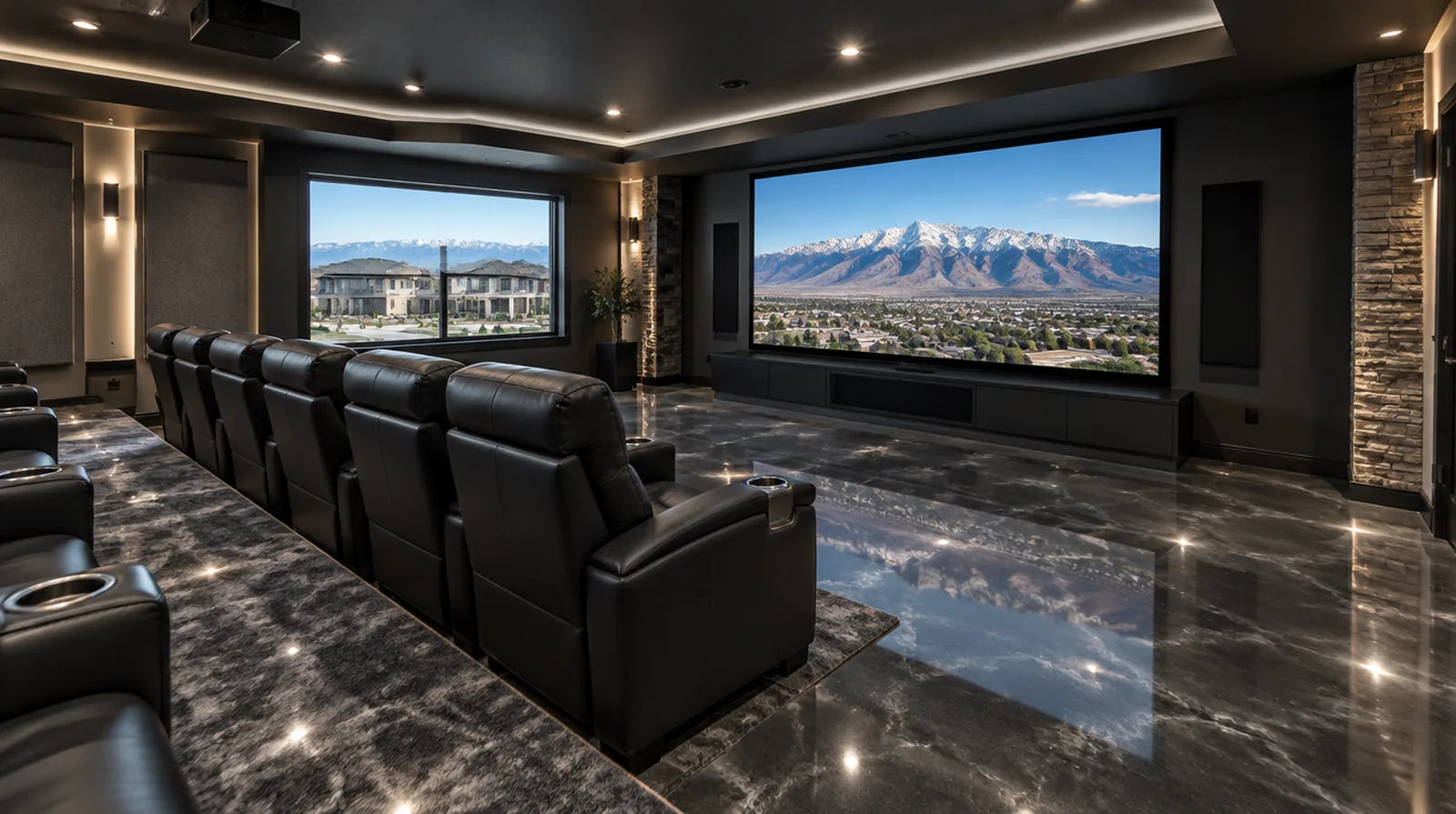
How metallic floors are made
Metallic epoxy uses fine reflective pigments mixed into a clear epoxy. While the epoxy is wet, installers move it with rollers, trowels, brushes and sprayers to create flowing patterns. The pigments settle and swirl, creating the look of molten metal, marble or water. Each floor is unique and handmade.
Popular spaces for metallic floors
Basement theaters, bars and game rooms are among the most popular places for metallic floors locally. Many new homes have large unfinished basements, and owners finishing them want something more interesting than carpet or vinyl. Metallic floors reflect light, which brightens basements with small windows. Commercially, they suit tech offices, showrooms, salons, boutiques and lobbies.
Choosing colors
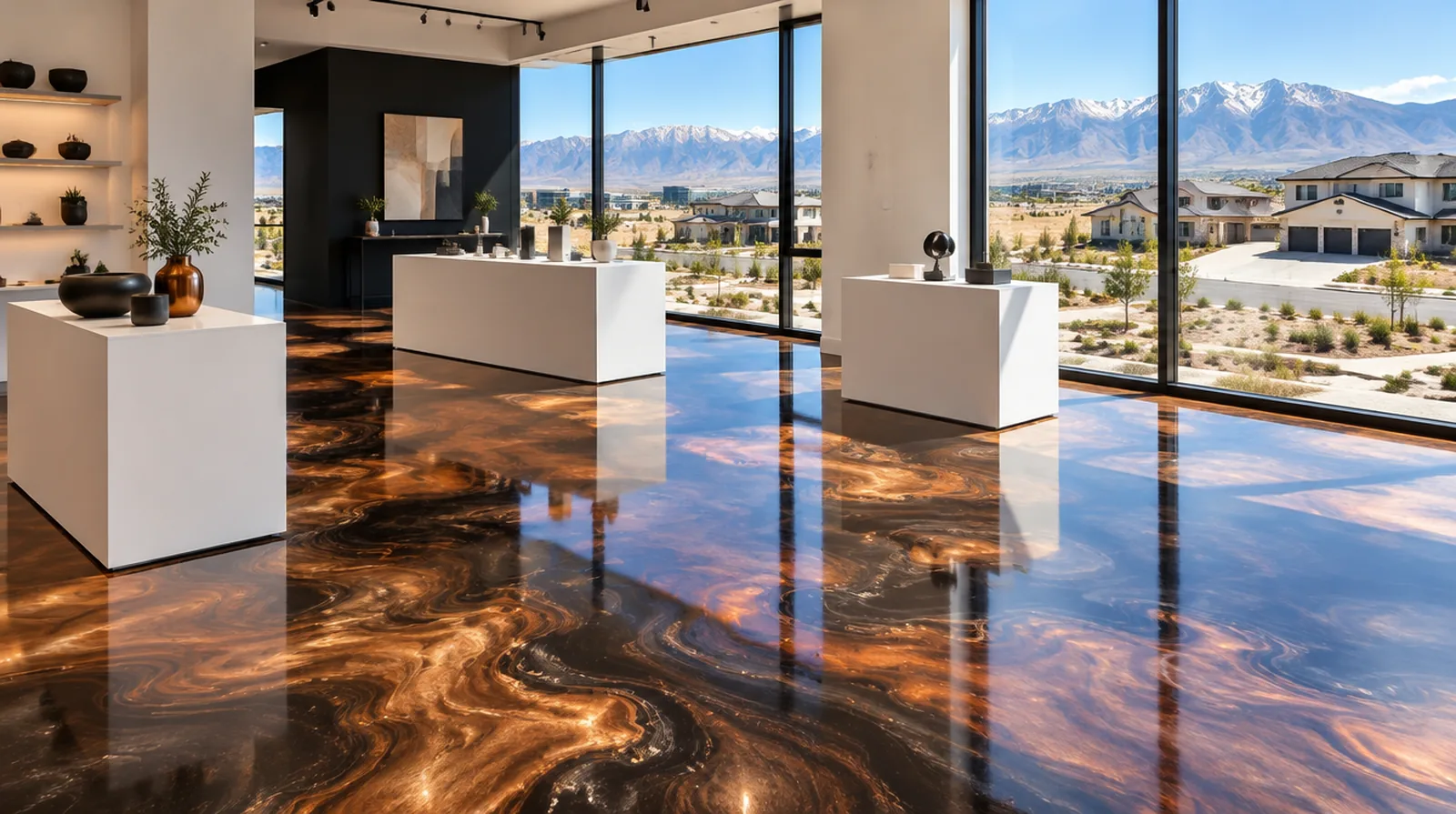
Silver and charcoal create a cool, modern look. Copper, bronze and gold feel warm and pair with wood. Blues and teals resemble water or stone. White and pearl produce a marbled effect. We can make a sample board and discuss how much movement and contrast you want.
Preparation
Metallic floors magnify imperfections. We grind and patch carefully, fill cracks and joints and apply a primer and a solid base coat before the metallic layer. In basements, we test moisture because vapor can cause bubbles or delamination.
Basement moisture
Even newer basements can have moisture vapor rising through the slab, especially in areas with high water tables or irrigation nearby. If tests show elevated moisture, we use a moisture-mitigating primer first.
Durability and protection
We top metallic floors with a clear UV-stable urethane for scratch and stain resistance. In homes, area rugs and furniture pads protect high-wear spots. In businesses, a sacrificial topcoat can be renewed as needed.
Traction
Glossy floors can be slippery when wet. We can add a fine anti-slip additive to the topcoat in bathrooms, bars or entry areas.
Metallic floors in garages
Some homeowners want a showpiece garage. Metallic floors can work there, but they show dust and scratches more than flake, and sun near the door can affect certain products. We explain the trade-offs and recommend topcoats suited to garages.
Timeline
Metallic floors usually take three to four days, including prep, base coat, metallic pour and topcoat. Light foot traffic resumes after about a day, with furniture after a few days.
Maintenance
Dust mop often and clean with a neutral cleaner. Avoid harsh chemicals. If the surface dulls in high-traffic areas over years, a fresh topcoat restores the shine.
Pairing floors and counters
Some clients match a metallic floor with a metallic epoxy bar top or counter in the same basement. Coordinating colors across both creates a finished, custom space. We can plan both projects together so the colors are mixed and poured to complement each other.
Cost factors
Metallic floors cost more than flake systems because they need more preparation, more material and more skilled labor. Size, number of colors, complexity of the design, condition of the slab and moisture mitigation all affect the price. Our written quotes break these down clearly.
Is it right for you?
Metallic floors are ideal if you want a dramatic, custom finish and do not mind a glossy surface that shows dust a bit more. If you want something lower maintenance, a flake or polished concrete floor may suit you better.
Lighting matters
Metallic floors change with the light. Recessed lighting, LED strips and daylight from window wells each bring out different depth and movement. We look at your lighting plan during the estimate and suggest colors that will look best in your room, day and night.
Design a metallic floor
Call (000) 000-0000 for a free estimate.