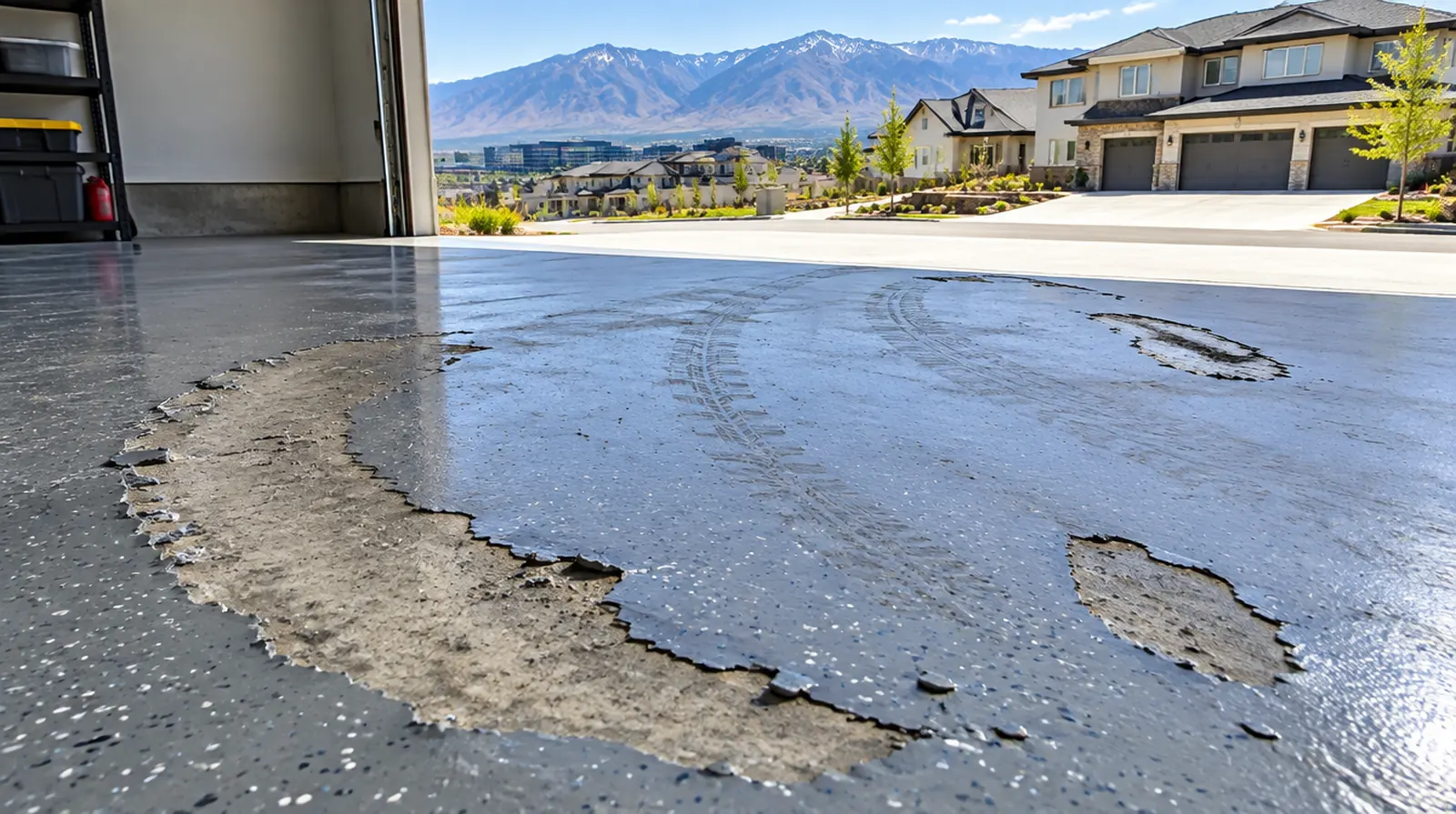
Why coatings fail
Most failures trace to preparation. Acid etching, thin DIY kits, applying coatings over curing compounds or sealers and coating too soon on new concrete all cause problems. Moisture vapor can push coatings off basements. Hot summer tires lift weak coatings in garages. We find the cause before recommending a repair.
Signs of trouble
- Peeling where tires sit
- Bubbles or blisters
- Yellowing near the door
- Chips and gouges
- Cracks through the coating
- Stains that will not clean
Spot repair or replacement
If most of the coating is well bonded, we grind out damage and rebuild the layers, blending flake to match. If it is loose in many areas, we remove it all and start over.
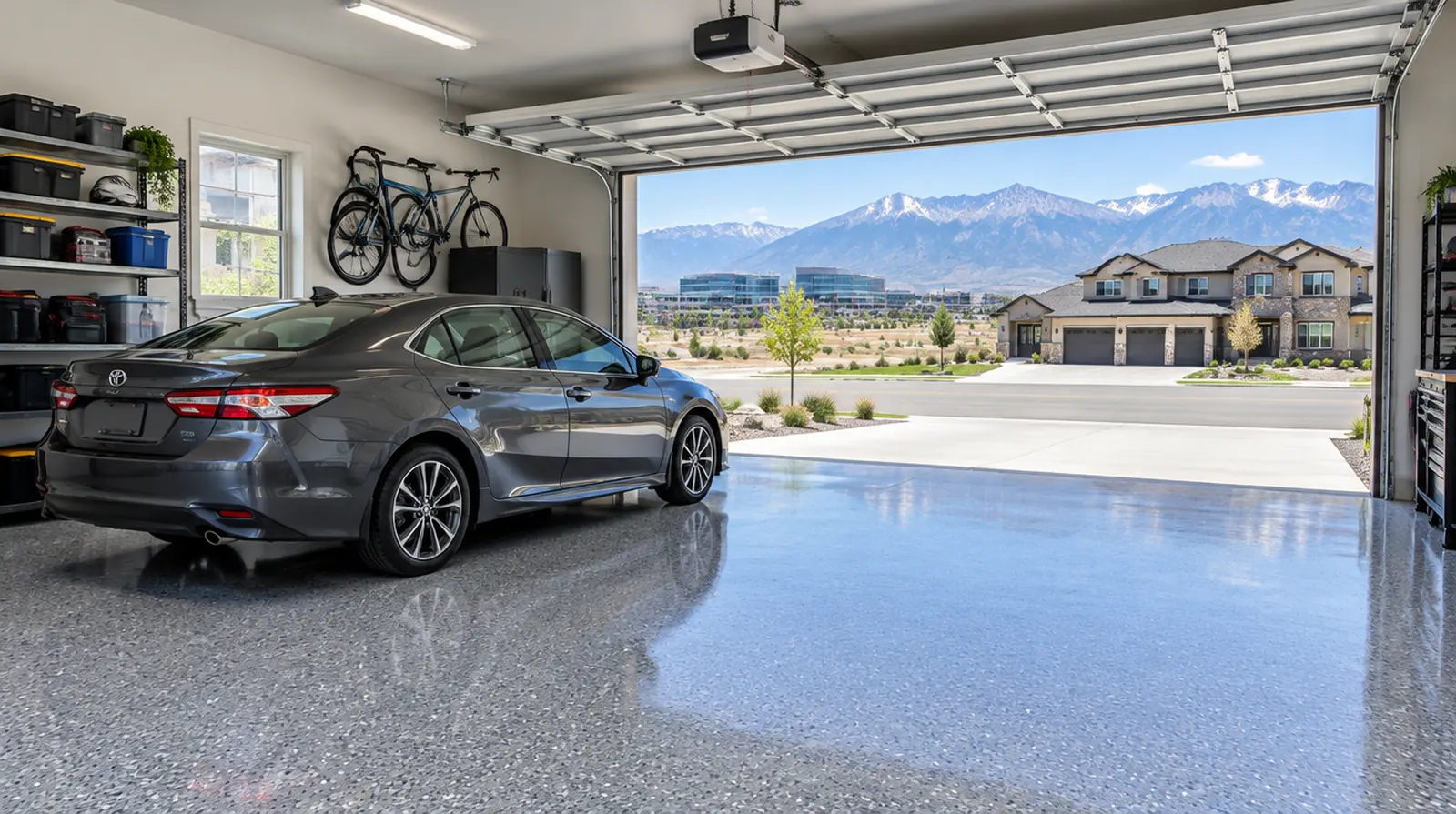
Removing failed coatings
We use diamond tools and dust collection to remove old coatings, then grind, test and repair the slab before installing a new system.
Builder-installed coatings
Some new homes come with thin coatings applied by builders, often without grinding. These can fail early. We can assess and replace them with a properly bonded system.
Yellowed floors
Epoxy without a UV-stable topcoat can amber near garage doors. If the coating is otherwise sound, we can grind lightly and apply a UV-stable topcoat.
Commercial repair
We repair worn areas at doorways, loading zones and drains and recoat surfaces after hours.
The inspection
We test adhesion and moisture, photograph problem areas and explain options with a written quote.
Repairing DIY kits
Many homeowners try a store kit first. These thin coatings are applied after acid etching and often fail within a year or two. There is no judgment here; we see it often. We explain what went wrong and remove the failed coating so the new floor bonds properly.
Moisture problems in basements
Even newer homes can have moisture vapor rising through basement slabs, especially with nearby irrigation or high groundwater. Blisters and white powder under the coating are signs of moisture. We measure it and use a mitigating primer in the new system.
Cracks and settlement
Settling soils in newer neighborhoods can crack slabs after a coating is installed. We route and fill cracks with flexible or rigid materials depending on movement and then blend the repair into the floor.
Stains and discoloration
Battery acid, harsh cleaners and certain tire compounds can stain coatings. Some stains can be removed; others require grinding and recoating the area. We test cleaning methods before recommending replacement.
Cost of waiting
Once a coating starts peeling, brine and water get under it and the damage spreads. Addressing it sooner limits how much grinding and patching is needed and saves money.
Preventing repeat problems
A floor built on ground, tested concrete with quality materials is the best defense. After that, rinse brine in winter and use pads under jack stands and heavy items.
What happens at the visit
We look at the failure pattern, tap the coating to find loose areas, test adhesion and measure moisture. We take photos and explain what we found in plain terms. You receive a written estimate covering spot repair, partial replacement or full replacement, along with our recommendation and the reasons behind it, so you can choose with confidence.
Commercial repairs
In warehouses, gyms and offices, coatings wear at doorways, loading areas and under heavy equipment. We repair those zones and recoat after hours so business continues as normal.
Not sure whether your floor can be saved? Send photos of the damaged areas along with the age of the coating, and we can give you an early idea of whether a repair or full replacement is likely.
Get your floor inspected
Call (000) 000-0000 for a free estimate.