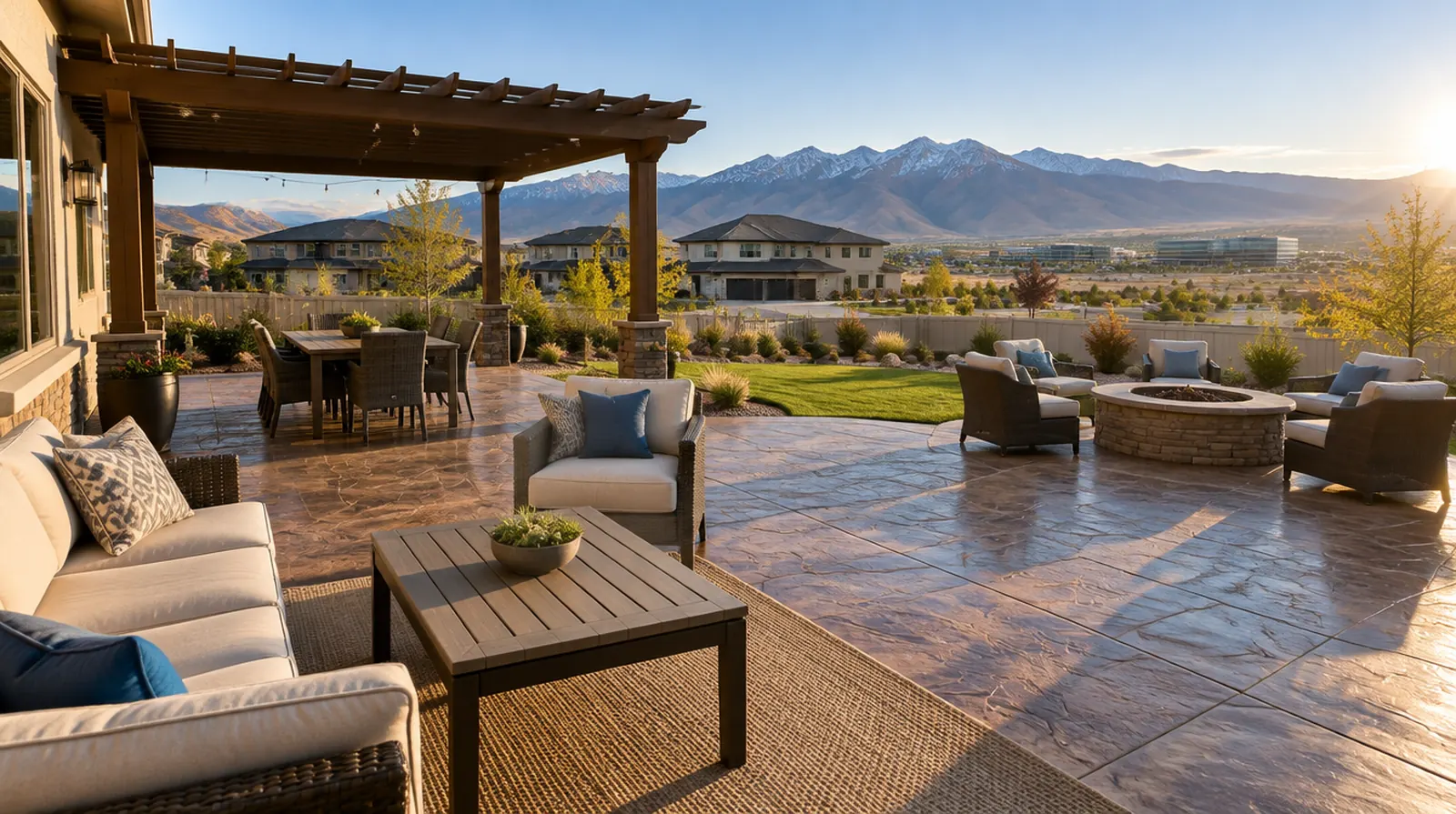
Why seal exterior concrete
Winters bring freeze-thaw cycles and deicing brine that damage unsealed concrete, causing scaling and pitting. Summers bring intense UV that fades colored and stamped concrete. Sprinkler overspray leaves hard water stains on walks and driveways. Sealing reduces water absorption, protects color and makes cleaning easier.
Penetrating sealers
Silane and siloxane sealers soak in and repel water without changing appearance or traction. They are ideal for walkways, driveways and steps.
Topical sealers
Acrylic and other film-forming sealers enhance color and sheen and suit stamped patios and decorative concrete. We add grip additives for safety.
Hard water and sprinklers
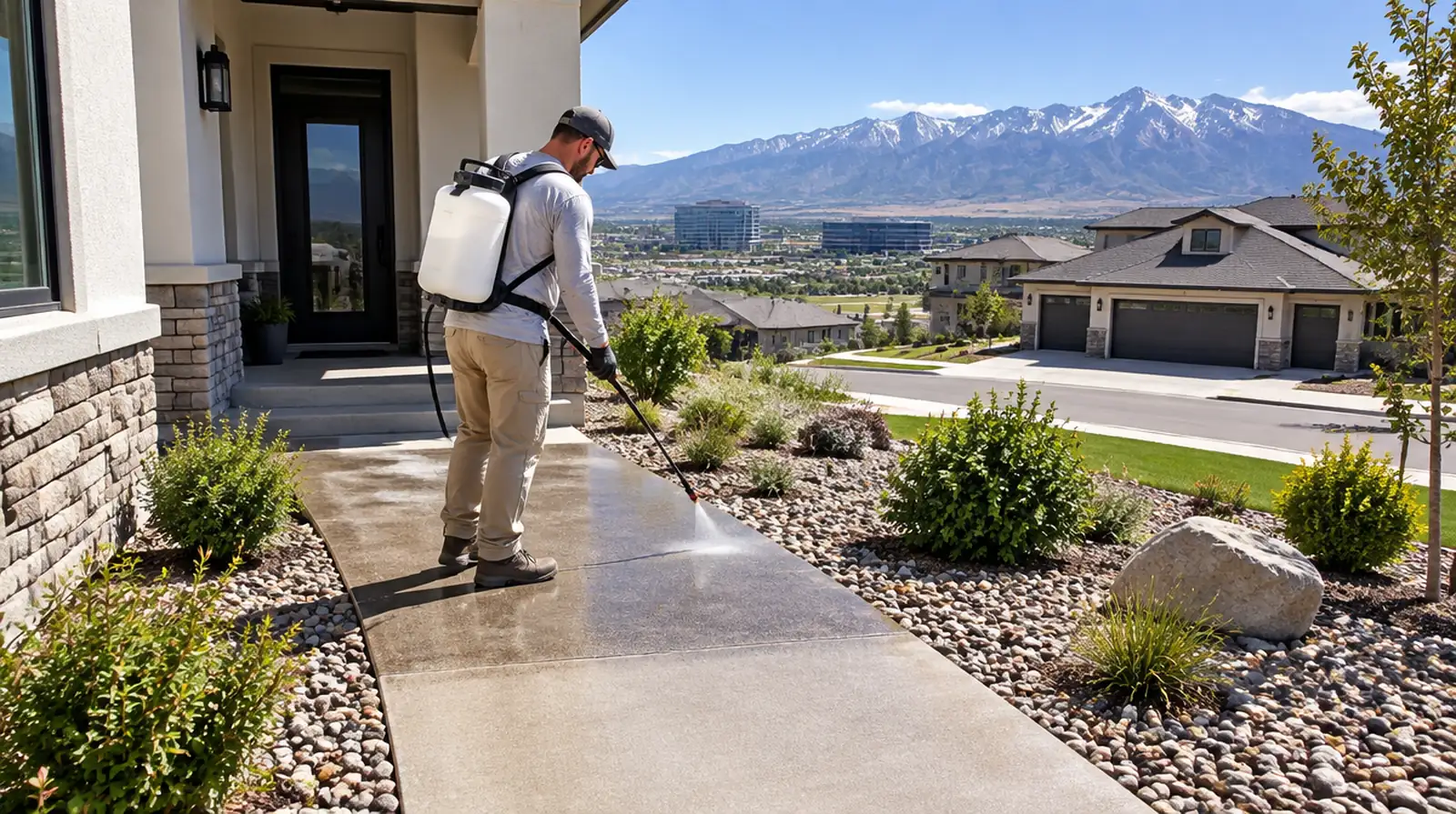
Irrigation water in this area is often hard, leaving white mineral deposits on concrete. We clean these before sealing, and a sealed surface makes future deposits easier to remove.
What we seal
- Patios and stamped concrete
- Walkways and steps
- Driveways and aprons
- Pool decks
- Commercial sidewalks and entries
Preparation
We pressure wash, remove stains and deposits and allow concrete to dry before sealing.
Timing
Sealing is best done in dry, mild weather from spring through fall, ideally before winter.
New concrete
New patios and walks should be sealed after curing and before their first winter.
Resealing
Penetrating sealers last several years. Topical sealers need refreshing every two to three years, especially in strong sun.
Pool decks
Pool decks deal with chlorinated water, sunscreen, constant sun and bare feet. A sealer protects the surface and color, and we add texture so wet feet have grip. We also recommend cool-deck or light colors where heat is a concern.
Stamped and colored concrete
Many new homes have stamped patios that fade quickly under high-altitude sun. A UV-resistant topical sealer restores color depth and protects against fading. Regular resealing keeps stamped concrete looking new.
Deicers
Rock salt and brine are hard on concrete, especially new concrete. Sand gives traction without chemical damage. Even sealed concrete benefits from using deicers sparingly and clearing slush before it refreezes.
Joints and cracks
We fill cracks and joints with flexible sealant to keep water from getting under slabs, where freezing can heave them. This pairs well with surface sealing.
Commercial and HOA properties
Retail centers, office parks and associations need safe, attractive walkways. We seal large areas efficiently and can set up a maintenance schedule to keep them protected.
What sealing will not fix
Sealers protect sound concrete. They do not repair badly scaled or broken surfaces, which need resurfacing first. We tell you honestly when that is the case.
Choosing the right product
Each surface gets the sealer that fits it. Walkways and steps usually get a penetrating sealer for traction. Stamped patios usually get a UV-resistant topical sealer for color. Driveways may get either, depending on stains and appearance goals. We explain the choice for each area in your quote, so you know exactly what you are getting and why. This keeps costs reasonable and results consistent across your property.
Landscape protection
We cover plants, rocks and siding before cleaning and sealing, and we control overspray so it does not land on windows, doors or vehicles.
Signs it is time to seal
Splash a little water on your concrete. If it darkens and soaks in within a minute, the surface is absorbing water and would benefit from sealing. Other signs include fading color on stamped patios, white mineral rings from sprinklers and small flakes appearing on steps after winter. A quick visit lets us confirm and recommend the right product.
Seal your concrete
Call (000) 000-0000 for a free estimate.